


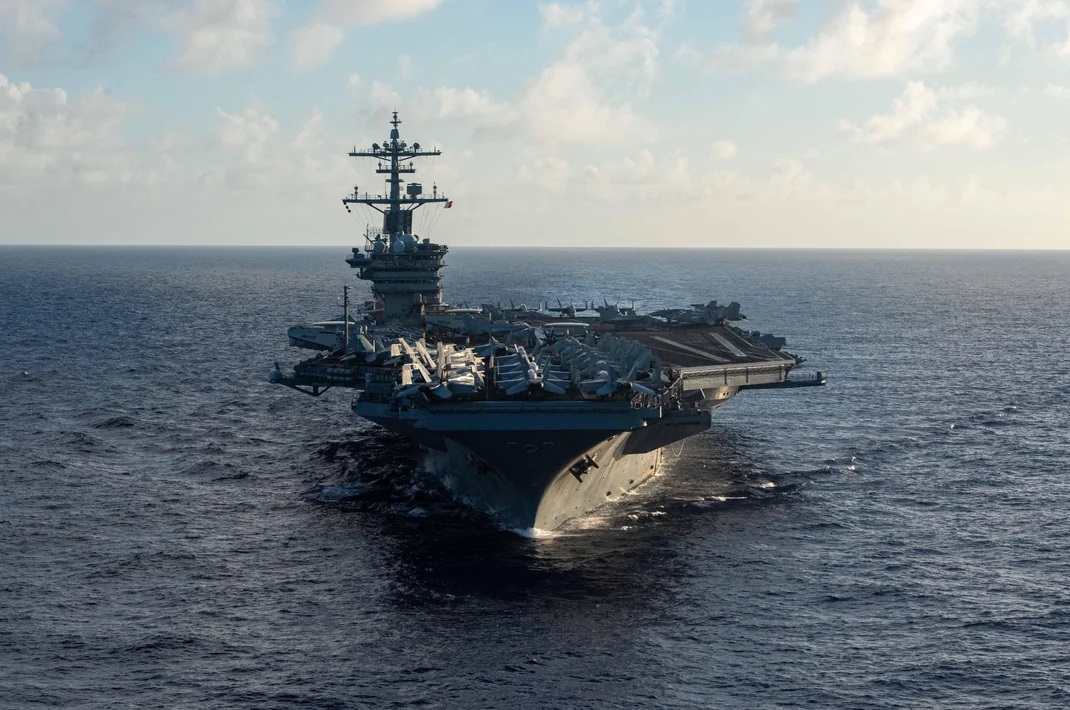
The United States Department of Defense has reinforced its military posture across the Middle East with the arrival of the USS Theodore Roosevelt Carrier Strike Group and an accompanying expeditionary amphibious task force.
The naval buildup brings three separate carrier strike groups into theater simultaneously, marking the densest concentration of Western naval aviation and guided-missile escorts in the region in over five years.
Pentagon officials confirmed that the strike groups have established continuous combat air patrols over international shipping lanes connecting the Persian Gulf, the Gulf of Oman, and the northern Arabian Sea.
"Our expanded naval architecture is deployed with unambiguous intent: to protect freedom of navigation, defend international commerce, and deter any party seeking to exploit regional maritime friction."— U.S. Central Command Operational Briefing
Securing Critical Maritime Chokepoints
Commercial shipping syndicates welcomed the enhanced security umbrella following recent hostile boarding attempts and missile skirmishes along energy export arteries. Over twenty percent of globally consumed seaborne petroleum transits the narrow waters of the Strait of Hormuz every day.
Allied naval escorts, including guided-missile destroyers equipped with Aegis Baseline 9 combat systems, have instituted coordinated convoy protocols for vulnerable bulk carriers and ultra-large crude carriers.



Inquiries and discussions must maintain diplomatic civility, analytical depth, and factual accuracy.
Sign in with your Google account to contribute to diplomatic discussions
No reader commentary yet
Be the first verified reader to submit your diplomatic dispatch or critique.